
*This is the first in a series of posts about biochar and its production and application*
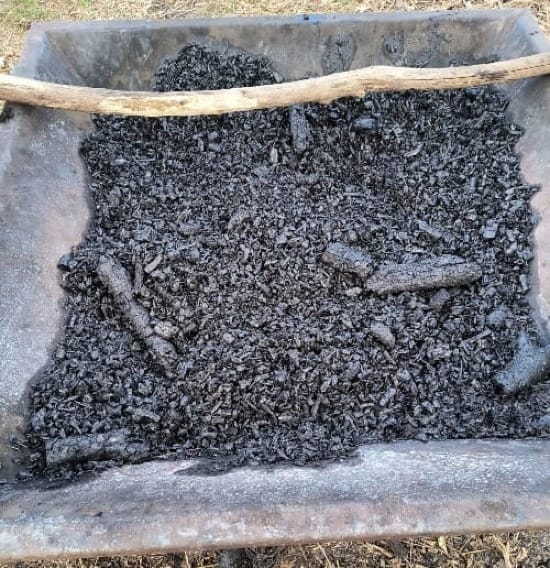
Biochar, a form of charcoal made from commonly found herbaceous and woody materials (which is to say, plants) which are heated to a very high temperature and inoculated with appropriate biology, is something we’ve been producing and working with for a number of years and educated others in, through consults, trainings, workshops, and large-scale applications. We believe it’s something under-appreciated for agricultural, forestry, and ecological work, and is accessible to people in resource-poor contexts.
Biochar has garnered a great deal of attention for its promise to sequester carbon, because of how resistant to degradation its carbon content is. But though that’s reason enough to make and use biochar, we’ve been keenly interested in how it can also be a tool for working with poor and degraded soils. Its unusual properties related to its porosity, density, and stability have been linked to improved nutrient and water retention and improved capacity to harbor microbiota in soils, and has been found to increase crop yields for farmers in a number of studies.
We want to stress that there is a difference between biochar and char—char is a powerful form of stable carbon, while biochar is that form of carbon inoculated with microbiota which becomes a tool and habitat for restoring soil life.
We recently spoke with two people we’ve worked with in areas where soils are often naturally poor and degraded by development and industrial waste about their approaches to biochar production and application: Kelly Pope, a gardener and biochar maker in Jacksonville, Florida, in the sandy Atlantic coastal region of the southeast US, and Lexie Gropper, a coordinator of the land project Amisacho in Lago Agrio, Ecuador, who we did the initial training for in biochar making, inoculation, and application, and who uses it now in restoration work in a part of the Amazon rainforest that has been heavily polluted by the oil industry.
We asked Kelly about what drew them to biochar:
In 2014, I started playing with tin cans from the grocery store I worked at, when our store still offered free coffee to customers. I was trying to make biochar-producing cookstoves for fun in my back yard, but quickly started looking at the massive fire pit my sister, who I was living with at the time, had made as the way to level-up making biochar. These days I am drawn to making bone char, drawing charcoal, and demonstrating that almost anything organic can be turned into biochar.
My soils are primarily in the sandy corner of the soil triangle, which can benefit from biochar applications. Depending on your proximity to the watershed and elevation (yes, what little we have of it does affect overall moisture) you might have more or less silt and organic matter, but we have few clay deposits like you might find nearer to the Appalachians. We have spring-fed waterways polluted by human activity, and a growing range of saltwater intrusion due not just to rising sea levels but accelerating dredging to expand the port system here.
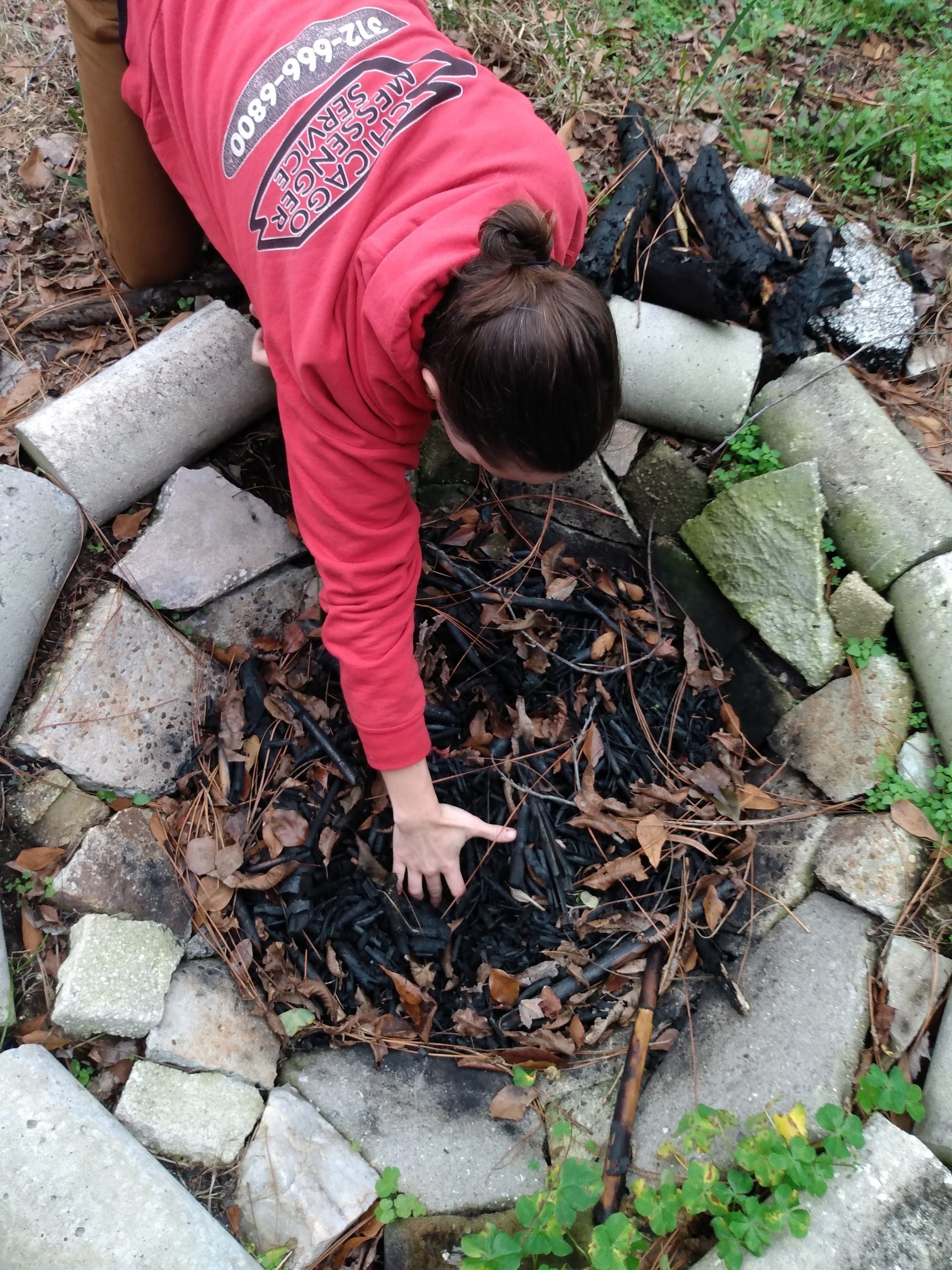
Kelly described how they look for and select materials:
I like to think I'm considering the ecosystem service of the feedstock selection, which can look like a couple of things. Is it invasive? Is it going to the landfill unless I intervene? In procuring the feedstock, did I have a net positive impact where that plant is currently growing? …My region, which stands the most to gain from applied biochar, partly because of how sandy the soils are, has vast amounts of biomass going to methane-producing landfills and large quantities of invasive plant species.
At my current job as a private gardener we have massive stands of bamboo which we don't currently use, and simultaneously parts of the property which are becoming too dry for the perennials already present. The vascular structure of this massive bamboo is visible to the naked eye, just these huge pores. So I have the blessing of the property owner to remove dead and dry bamboo, take it home to render into char, and I return with the char to use in our on-site composting. We just applied about half a yard of co-composted biochar in the section we added drip irrigation to last year, and mulched over it this past week.
There can be challenging materials—certainly anything larger than four inches in diameter, anything not dry enough. Dryness is the main challenge, considering our humidity level and rainfall, and that tropical tree species sometimes take forever to dry. It may be the resin, but Sweetgum has always been a challenge to a good burn for me. I'm not sure why but it just seems so obstinate when I've worked with it.
Some of Kelly’s considerations involve the value of physical characteristics, both for application and production:
I've attempted to consider the vascular structure and granular size of the feedstock, and have made bone biochar with intent to assist with community-based remediation or restoration work. With the bone char, I kind of just accumulated pork shoulder bones from a local pit boss, and learned bones are easier to char in cans on fire pits. For the most part at home I'm using a mix of feedstocks because of the impact they seem to have on the burning process itself - softer things like Tithonia and palm make great kindling, but oak and camphor need a steady heat to really catch, for example.
Kelly sees a possibility for organizations and small businesses to be both sources of material and venues for receiving or distributing biochar made from it:
I've partnered with a farm to render their crop residue from roselle hibiscus season into biochar, which they generate a lot of biomass growing those delicious calyxes. Last year I was unprepared mentally for what volume they actually generate so this year I'm hoping to do better by this endeavor, because it's a lot and it's all green. Whereas with Yellow House, a community arts and mutual aid space, I have rendered some of their yard waste from the oak, camphor, and cherry laurel on site into biochar that I've packaged for them to sell retail.
For Lexie, biochar was something she and her colleagues at Amisacho saw could be of help in restoring the complex and challenging soils of the Amazon:
The Amazon region is made up of diverse soils, including areas dominated by clay-rich soils. These soils are often highly compacted, which prevents plant and tree roots from penetrating deeply, keeping them near the surface. Water behaves the same way—it can’t infiltrate properly, so it pools and stagnates on top, or, in sloped areas, leads to severe erosion.
On the other hand, there are very sandy soils where the opposite problem occurs. When roots penetrate, there isn’t much structure to hold them, so plants are more likely to fall over. Water doesn’t stay in the soil- it drains quickly, taking nutrients with it.
This is where biochar becomes a powerful tool. It helps restore the properties we look for in soils with high organic matter. Whether the soil is clay-heavy or sandy, biochar improves microbial activity, retains moisture while still allowing proper filtration of water and nutrients, increases airflow, and overall supports healthy root development.
The materials they use are often dictated by accessibility, given both the scarcity of what is available and limitations on transport:
In the end, we work with whatever is available in each area. For example, just outside our neighborhood there are several broomstick factories that work with wood. They usually burn all the imperfect broomsticks and leftover wood scraps during processing. We see a lot of value in preventing that carbon from going straight into the atmosphere through open burning, and instead capturing it for the soil by turning it into biochar.
But in more remote communities or neighborhoods, people don’t always have access to broom factories. So we explore whatever materials are locally available. For example, there are residues from carpentry or processing agricultural products like coconut, sugar cane, coffee, or rice. And in forested areas, there are fallen trees or bamboo. The key is identifying the easiest and most accessible sources for the community, especially since most people don’t have a way to transport raw materials.
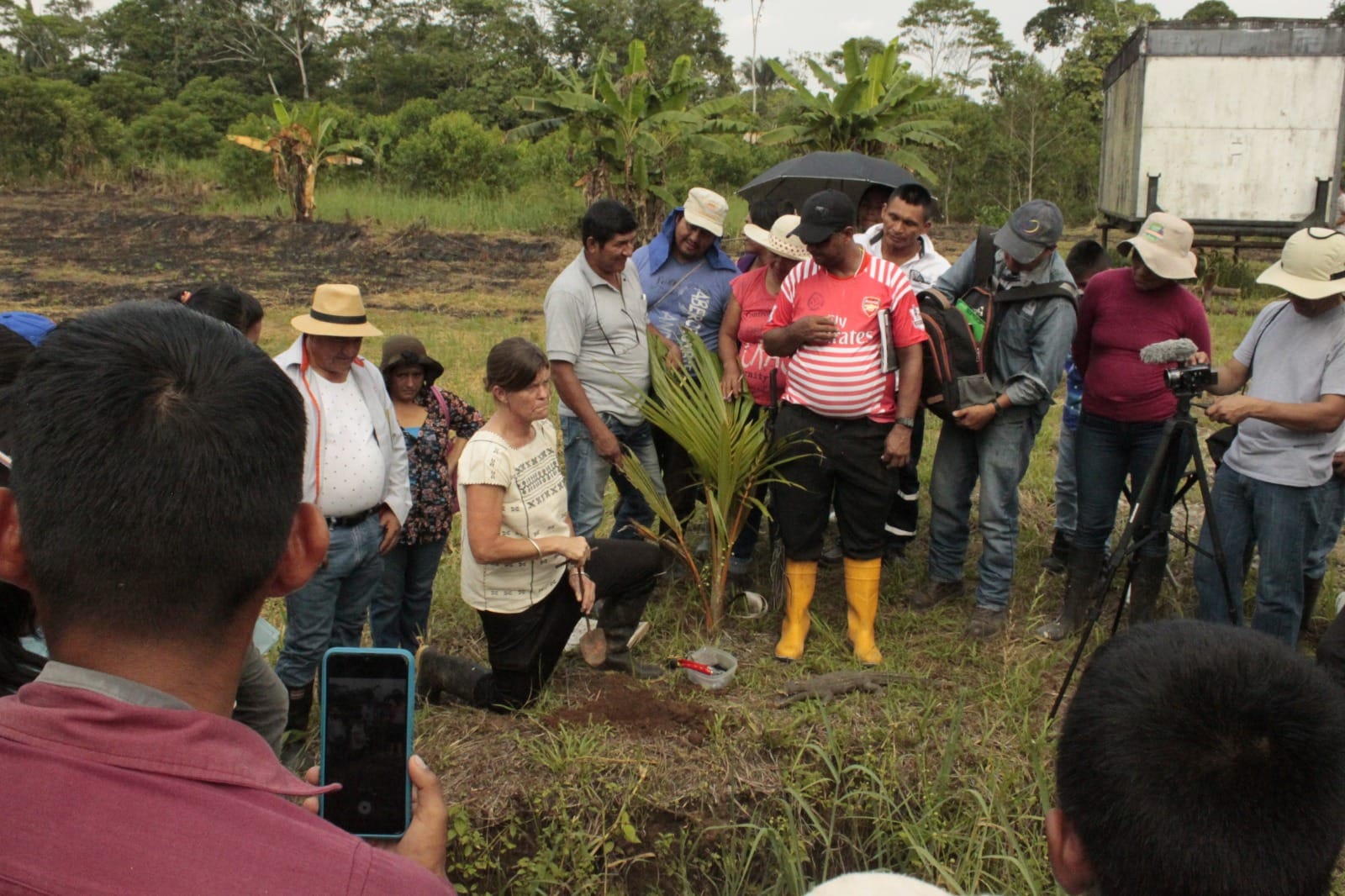
Biochar is also a way to address long histories of land degradation:
We use biochar for restoring soils that have been degraded by cattle ranching or chemical-based agriculture, as well as areas affected from possible industrial contamination. But in general, we apply it as an amendment to all types of soils- from seedbeds and transplant plots, to compost mixes. We activate it with mountain microorganisms or bokashi, and we also bury it around trees that are already established.
You can see the effects, especially in clay soils, where roots are able to penetrate more deeply. Trees grow larger and more productive than plants that haven’t received biochar. In many cases, you begin to see more life and more humus in the soil.
We’ve noticed fungal growth, mycorrhizae, around the roots where growing through the charcoal. You can observe how the trees start producing new shoots and leaves, and depending on the age of the tree, you even start to see flowering and fruiting. Applied to impoverished soils, such as red clay, biochar helps trees gain vitality and grow stronger with deeper roots.
The benefits can't always be measured, partly due to costs, and so observation plays a key role:
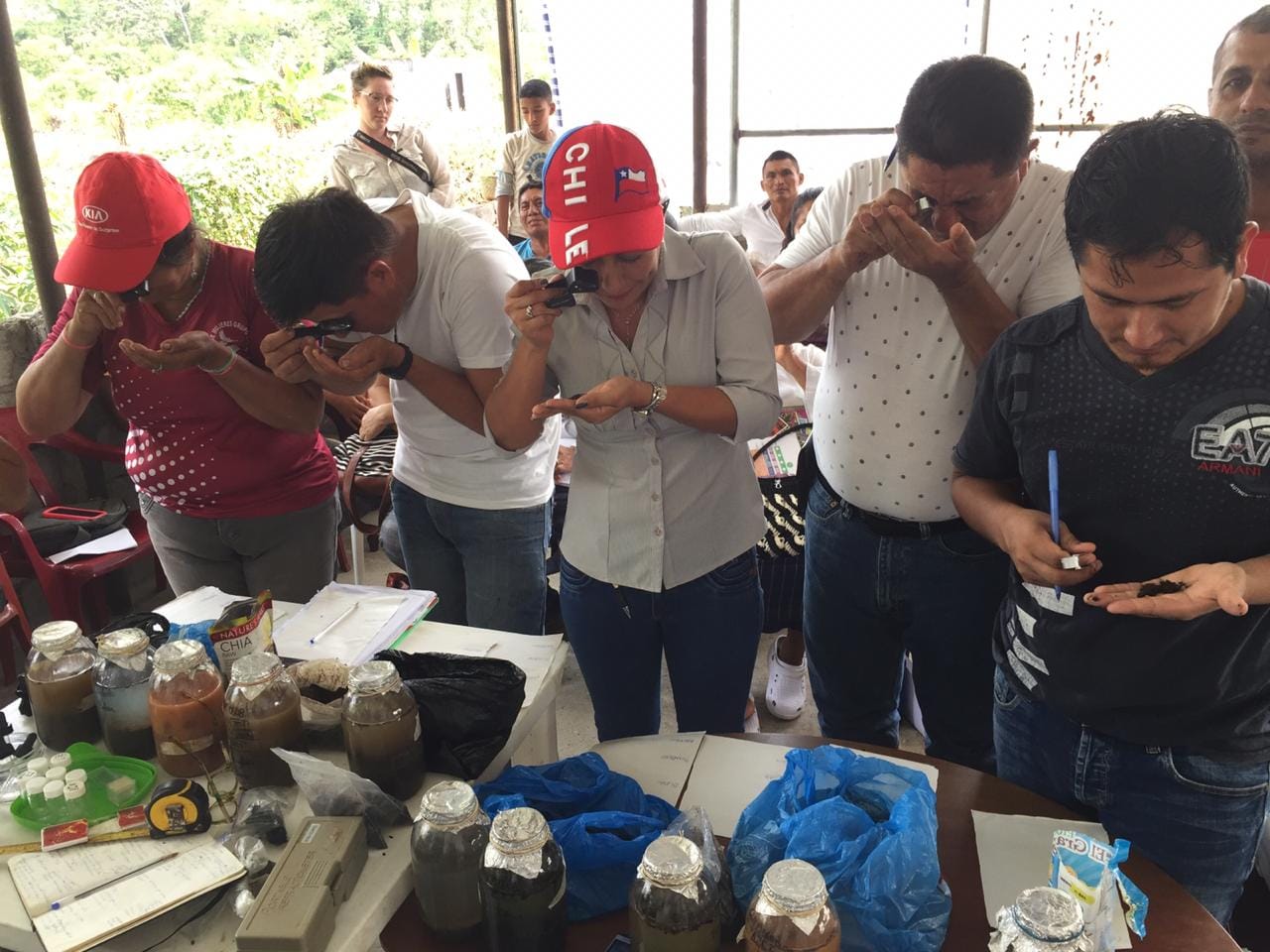
Here, we work with farmers and communities who will never have access to soil tests. So we focus on observations you can make with your senses: feeling the soil, observing diversity, noting growth, watching insects return, checking soil consistency, and so on. Often, we use a field microscope to project soil samples and show people the life in the soil and the changes that aren’t visible to the naked eye.