Every week for the past handful of years, I have traveled between the urban and the rural of my 1/16th of an acre ‘property’ in Chicago and the 50 acres of land I steward in The Driftless Region. My spirit is enriched by this toggling between, and while my soul is a strong constant, the roles I play in both places, as well as how and to whom I listen to and communicate, are quite different. And I am not talking just about humans here.
There is also a lag and gain (depending on my perspective) of a week or more of seasonal difference between the two places mostly due to latitude, altitude, and percentage of heat-absorbing concrete and asphalt and large wind-blocking buildings sinking and storing even more heat. In the two hour drive between city and country, I feel like I am time traveling, expanding my foraging window for foods and medicines - a now many decades practice of mine.
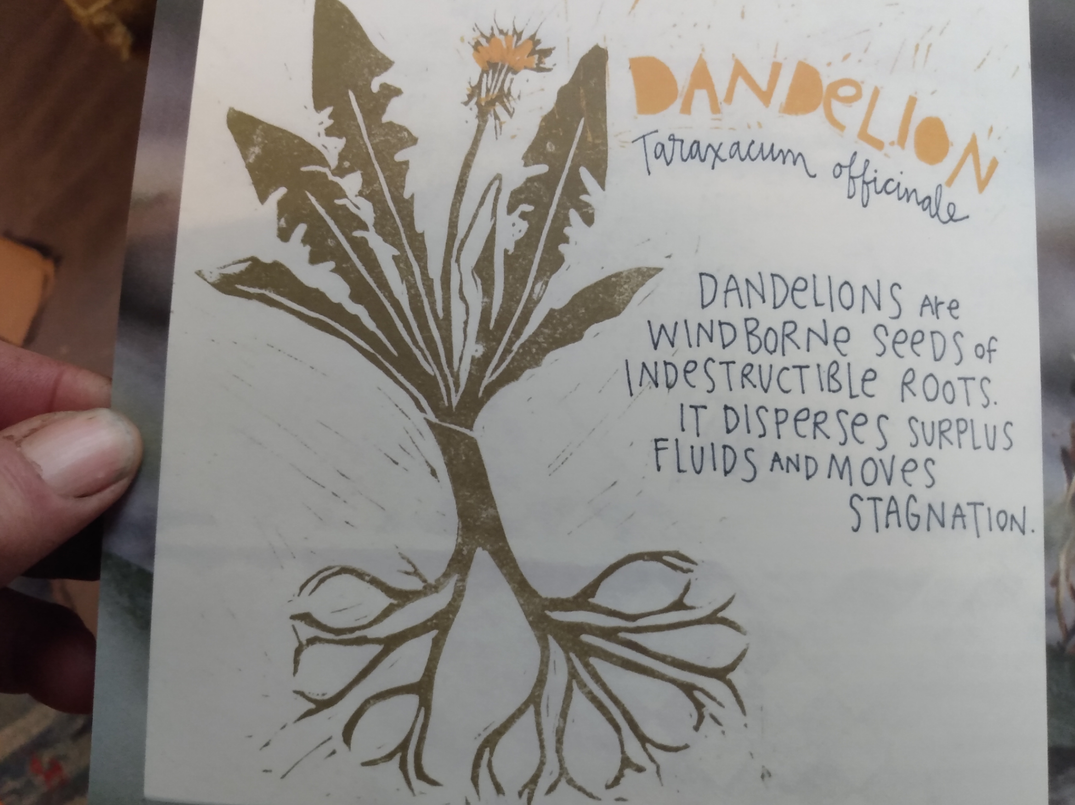
And so, it is time, here in Chicago, to gather fresh flowers and leaves of dandelion, one of my top, if not persistently favorite, plants.
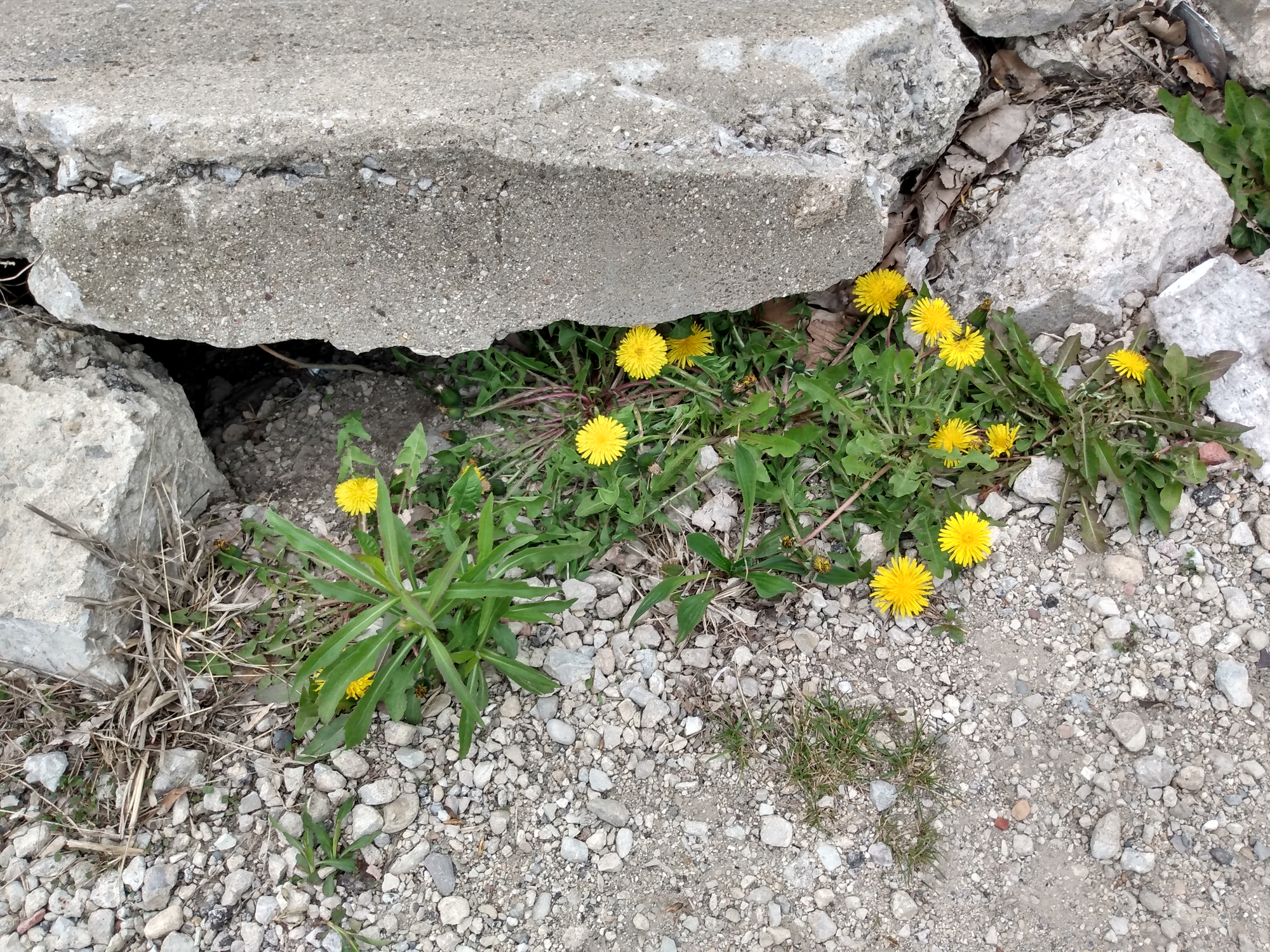
Imagine their tap roots swelling and expanding the sidewalk crack to invite in more life, and offering their sugars to soil bacteria, fungi and others in exchange to receiving calcium, magnesium and potassium. Gently pick and nibble on their bitter nutritious greens and let their bright bitterness penetrate and support the health of your kidney and liver. Let the light of their flowers penetrate your beingness and consider making dandelion wine~
What follows is an excerpt of my inaugural Weedeater monthly column for Arthur Magazine - a lavishly produced free music and culture magazine where for years I enjoyed the creative and thinking company of Arik Roper, Douglass Rushkoff, Thurston Moore and many others. It was widely distributed (maybe 80,000 copies/issue) both in the states and abroad, mostly at music stores (when we had more of them than we have now) at a time in our cultural history when independent print was more broadly supported and enjoyed. Arthur Magazine remains archived: www.arthurmag.com
I first tasted dandelion wine when I bought a bottle of it at a folksy gift shop in the Amana Colonies (yes, Amana of the appliance fame). The Amana Colonies is an Amish community dating back to 1854. It was settled by the communally living German pietists then known as The Community of True Inspiration, or The Ebenezer Society. Their tenets included avoiding military service and refusal to take an oath. The Amanas are nestled in the middle of what is now a sea of genetically modified corn and soybeans known as the Midwest, more specifically Iowa.
I had wanted something to drink at my campsite that evening. When I opened the bottle, I anticipated something more magic than what met my tongue. It was cloying yellow syrupy stuff, which resembled soft drink concentrate. I poured it out next to my tent, returning it to the earth where she could compost it. I was sure that I’d never get close to it again.
That was fifteen years ago, and now I have been drinking dandelion wine for about two years. The new stuff is stuff I’ve made myself from dandelion blossoms gathered in Chicago. I’m happy to say that it is divine. I am sure now that the colonists actually keep the good stuff in their private cabinets.
Upon mentioning “dandelion wine”, Ray Bradbury usually comes to mind. However, after I heard a radio interview with him a few years back when he passionately made a case to colonize the moon so we can ditch this trashed planet and survive as a race, I got confused. Enough said.
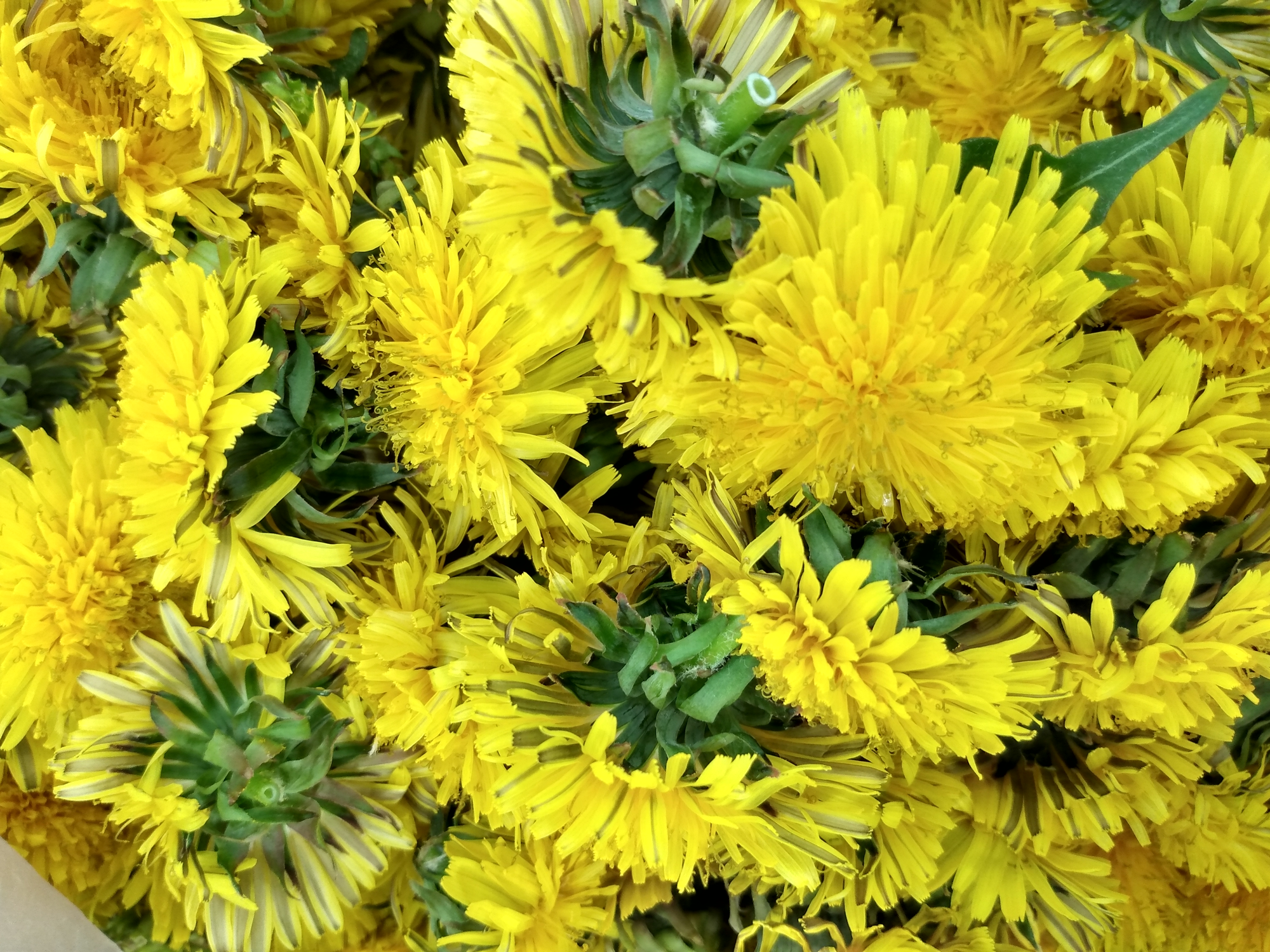
So the point is, I am going to tell you how to make dandelion wine. I encourage you to do this because dandelions pop up everywhere and every place. They are nearly ubiquitous pioneers in our landscapes of disturbed and deprived soils. Consumed, they are a magnificent digestive, aiding the heath and cleansing of the kidneys and liver. Amongst vitamins A, B, C and D, they have a huge amount of potassium.
As a beyond-perfect diuretic, dandelion has so much potassium that when you digest the plant, no matter how much fluid you lose, your body actually experiences a net gain of the nutrient. In other words, folks – dandelion wine is one alcohol that actually helps your liver and kidneys! Generous, sweet, overlooked dandelion…
When you notice lawns and parks spotting yellow, it’s time to gather. The general rule of thumb is to collect one gallon of flowers for each gallon of wine you want to make.
Enjoy your wandering. People will think you quaintly eccentric for foraging blossoms on your hands and knees. Note: collect blossoms (without the stem) that have just opened and are out of the path of insecticides and pesticides.
So here’s how I make dandelion wine…
I pour one gallon boiling water over one gallon dandelion flowers in a large bowl. When the blossoms rise (wait about twenty-four to forty-eight hours), I strain the yellow liquid out, squeezing the remaining liquid out of the flowers, into a larger ceramic or glass bowl. I compost the spent flowers (thanks dandelion!).
Then I add juice and zest from four lemons and four oranges, and four pounds of sugar (4-4-4 = E.Z.). Okay, now here’s what I think is the best part: I float a piece of stale bread, sprinkled with bread yeast, in the mixture. This technique is used in Appalachian and some European recipes.
Then I toss a dishtowel over it so the mixture can both breathe and the crud floating around my house stays out. I continue stirring the wine several times a day until it stops fermenting. This takes about two weeks or so.
When I am certain it has stopped “working”, I strain, bottle and cork it up and bid it farewell until months later. In fact I wait until the winter solstice, when I can revisit that sunny spring day by drinking it in.
Originally published in Arthur Magazine No. 29/May 2008